
For many postgraduate researchers, the most exciting—and sometimes daunting—stage of a project is diving into primary sources. Whether you are exploring modern politics, medieval theology, the history of science, or twentieth-century literature, working with original archives, manuscripts, and rare books can transform your research.
Postgraduate researchers often delay visiting archives or special collections until late in their project, but engaging with primary sources early can shape your research questions, refine your methodology, and open up new avenues of inquiry. Even a preliminary visit can help you understand the scope of what’s available—and what’s possible—for your research.
Archives, manuscripts and rare books are held by a very wide variety of holding institutions, not just in universities such as ours. You might find relevant primary sources in:
- the UK’s national libraries and archives;
- public libraries and local record offices;
- subscription libraries (e.g. The London Library);
- cathedrals, churches and monasteries;
- National Trust properties and other historic houses;
- museums and art galleries;
- private schools and colleges;
- private companies and law firms;
- specialist repositories such as The Welcome Trust, Black Cultural Archives, LGBTQIA+ Bishopsgate Institute or The Society of Antiquarians;
- the royal palaces;
- and even a prison service training college (in Rugby, if you’re wondering).
This list is not exhaustive. Thankfully, there are online and printed aids and catalogues to help you find the collections you need. JISC’s Archives Hub and Library Hub Discover facilitate searches for material nationally, as does The National Archives’ catalogue. The National Archives also provides a UK directory of where archival repositories are, while Karen Attar’s Directory of Rare Book and Special Collections in the UK and Republic of Ireland (2016, 3rd ed.) does likewise for libraries.
Researching in special collections is not always straightforward. Materials can be complex, fragile, difficult to read, or catalogued differently from published books. That’s where the specialist staff at the collection you are visiting come in. Their knowledge of the collections means they can often point you toward items you may not have discovered on your own.
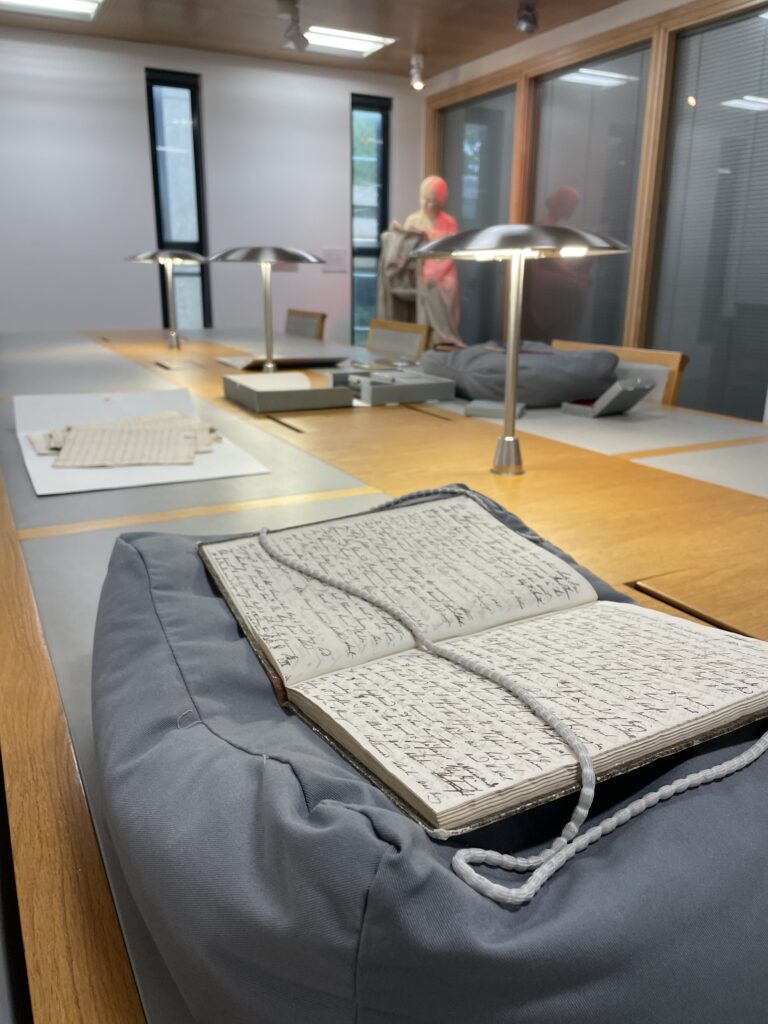
Be assured, archivists and rare book librarians are able and ready to answer your questions, to help you:
- Understand the catalogues and finding aids
- Identify relevant collections
- Navigate terminology and historical context
- Request and handle material safely
- Make the best use of reading room facilities
At the University of Birmingham, the Cadbury Research Library (CRL) offers a wealth of material and expert support to help you get the most out of these unique resources. Home of the University’s extensive special collections, which include more than 4 million manuscripts, 250,000 rare books, and hundreds of archival collections, the CRL has strengths in religious archives, modern political collections, Middle Eastern manuscripts, youth movements, and significant literary and cultural holdings.
PGRs do not need to book an appointment to visit CRL. However, we strongly recommend emailing in advance, especially if you are early in your research or planning to consult a large amount of material. Getting in touch beforehand allows staff to advise on which collections are most relevant, explain any handling or access requirements, and retrieve items so they are ready for you upon arrival.
Exploring primary sources is one of the most rewarding aspects of postgraduate research. Working with expert staff, including the CRL team, will make that journey welcoming, efficient, and intellectually enriching.
Discover more from UoB PGR Development blog
Subscribe to get the latest posts sent to your email.