
Citations are something of a currency in academia. When authors cite one another, they are acknowledging an intellectual debt. Because citations can be counted (by publishers who index the literature) they have become a proxy for influence. Citations make up a significant proportion of the score for the university rankings.
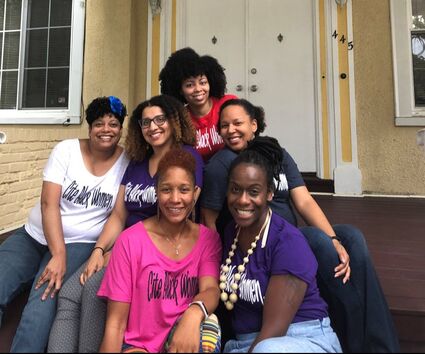
There is growing evidence that women, people of colour and other minoritized groups are proportionally under-cited. The prevailing language of research is English, and key citation databases index a very small number of journals and books in other languages. Finding and reading literature featuring diverse voices is difficult, and this reinforces inequalities in the scholarly record.
In order to address these problems, some publishers are encouraging the practice of including citation diversity statements alongside journal article submission. The template for submission includes an optional section for these statements, which identify efforts made by the authors to include research from minoritized authors. There is no mandate to include a statement, but by simply prompting authors to consider it, awareness of the issue of the research monoculture is raised.
The journal Nature is one of the publishing venues that has adopted a template that includes optional citation diversity statements. In the last month, there have been high profile complaints against this approach, from scientists such as Richard Dawkins. The Telegraph reported that:
Prof Anna Krylov, a professor of chemistry at the University of Southern California, shared an open letter online encouraging fellow scientists to boycott Nature until it “recommits to scientific excellence”. She said it was “to social-engineer their manuscript’s bibliography to promote members of favoured identity groups”, and that it was “particularly harmful because it undermines the rigour and reliability of published research”.
It is curious some academic researchers see scientific integrity as synonymous with the status quo, and don’t see excellence and diversity as being able to co-exist. Priyamvada Gopal writes on higher education, but could equally be talking of the scholarly record when she puts it concisely:
a largely white or largely male curriculum is not politically incorrect, as is often believed, but intellectually unsound. Monocultures do not produce good thinking and are in themselves a lethal form of unmarked narrow identity politics.
Reading and citing a diverse range of knowledge in our work is a choice we can make. Should we question the structures that perpetuate inequality? Is it a healthy challenge that strengthens the integrity of our research?
The Research Skills team offer a short online workshop examining the concept of citation justice in more detail. Come along and see what steps you can take to make your literature searching more diverse if it’s something you feel you would like to do.
Discover more from UoB PGR Development blog
Subscribe to get the latest posts sent to your email.